
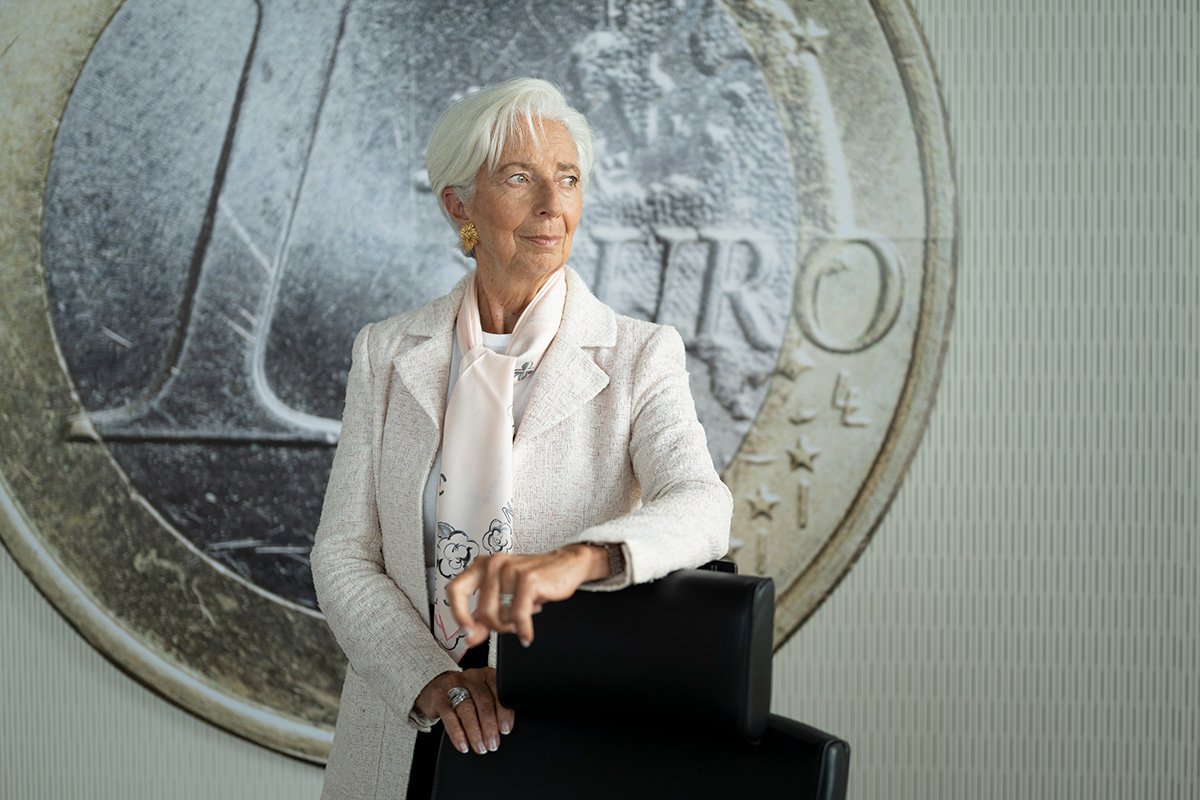
Photo (source): European Central Bank
Christine Lagarde has put a date on the end of her presidency of the European Central Bank.
The ECB confirmed on 29 October that Lagarde will step down on 7 February 2027, almost nine months before her eight-year term was due to expire at the end of October.
The announcement ends months of speculation about an early departure and starts a potentially important contest over who will lead the institution that sets monetary policy for the euro area.
For currency markets, the question is not simply who replaces Lagarde. It is whether the next ECB president will favour a more aggressive or more cautious approach to inflation and interest rates.
Why is Christine Lagarde leaving early?
Lagarde has led the ECB since November 2019, taking over from Mario Draghi just months before the Covid pandemic transformed the European economy.
Her presidency subsequently had to deal with the pandemic, Russia's invasion of Ukraine, the European energy crisis, the biggest inflation shock in decades and, more recently, another period of energy-driven inflation.
Her term was originally due to end on 31 October 2027. The ECB has not given a detailed reason for the timing of her departure. Lagarde had, however, already suggested that she might leave several months early.
Her name has also been linked with the chairmanship of the World Economic Forum, although no such appointment has been confirmed.
There is another important piece of timing. Leaving in February means European governments can choose the next ECB president before the French presidential election later in 2027.
Who could replace Lagarde?
The succession process starts immediately, according to European Council President António Costa. The final appointment will be made by the European Council following the procedure laid out in the EU treaties. Two names are currently attracting particular attention.
Klaas Knot, the former president of the Dutch central bank, has long been one of the more hawkish voices in European monetary policy.
Pablo Hernández de Cos, the former governor of the Bank of Spain and now general manager of the Bank for International Settlements, is another leading candidate.
Other names could still emerge. ECB appointments are rarely based on monetary policy views alone. Nationality, political balance and other senior EU appointments usually become part of the negotiations.
That makes the next few months more than a simple search for the best economist.
What could Lagarde's departure mean for the euro?
In the short term, probably less than the headlines suggest. The euro did not experience a dramatic reaction immediately after the announcement. That makes sense. Lagarde is not leaving tomorrow, the ECB's Governing Council remains in place, and monetary policy is decided collectively rather than by the president alone.
The longer-term implications could be more interesting. A president perceived as more hawkish could make markets expect interest rates to remain higher for longer when inflation is above target. Everything else being equal, higher expected interest rates can support the euro.
A more dovish president could have the opposite effect if investors begin to expect faster rate cuts or greater tolerance for weaker inflation control.
But the name of the president will never be the only factor. Inflation, economic growth, energy prices, government bond markets and US Federal Reserve policy will continue to have a much larger day-to-day influence on EUR/USD and other euro exchange rates.
A difficult moment to change leadership
Lagarde is leaving at an awkward point in the monetary policy cycle. Europe is once again dealing with higher energy costs and renewed inflation pressure, while expensive borrowing and weak growth are creating pressure in the opposite direction.
That is exactly the kind of environment in which communication from a central bank matters.
Markets will therefore pay close attention not only to who is selected but also to how the next president talks about inflation, interest rates and the ECB's willingness to tolerate weaker economic growth in order to maintain price stability.
I think the successor matters more than the resignation
Lagarde's early departure itself is unlikely to become a lasting driver of the euro. The choice of her replacement might. If European governments select a president who is clearly seen as more hawkish or dovish than Lagarde, markets could gradually reprice expectations for future ECB interest rates.
That could influence European bond yields and, eventually, the euro.
The counterargument is that the ECB president is only one member of the Governing Council, and that is true. But the president has considerable influence over communication, consensus building and how monetary policy is presented to financial markets.
What happens next?
Lagarde will remain ECB president until 7 February 2027.
European governments will now begin negotiations over her successor, and markets will increasingly pay attention to the monetary policy views of the leading candidates.
For the euro, that succession race is worth watching. The important question is not whether Christine Lagarde is leaving nine months early. It is whether the next ECB president changes what investors expect from European interest rates over the years ahead.